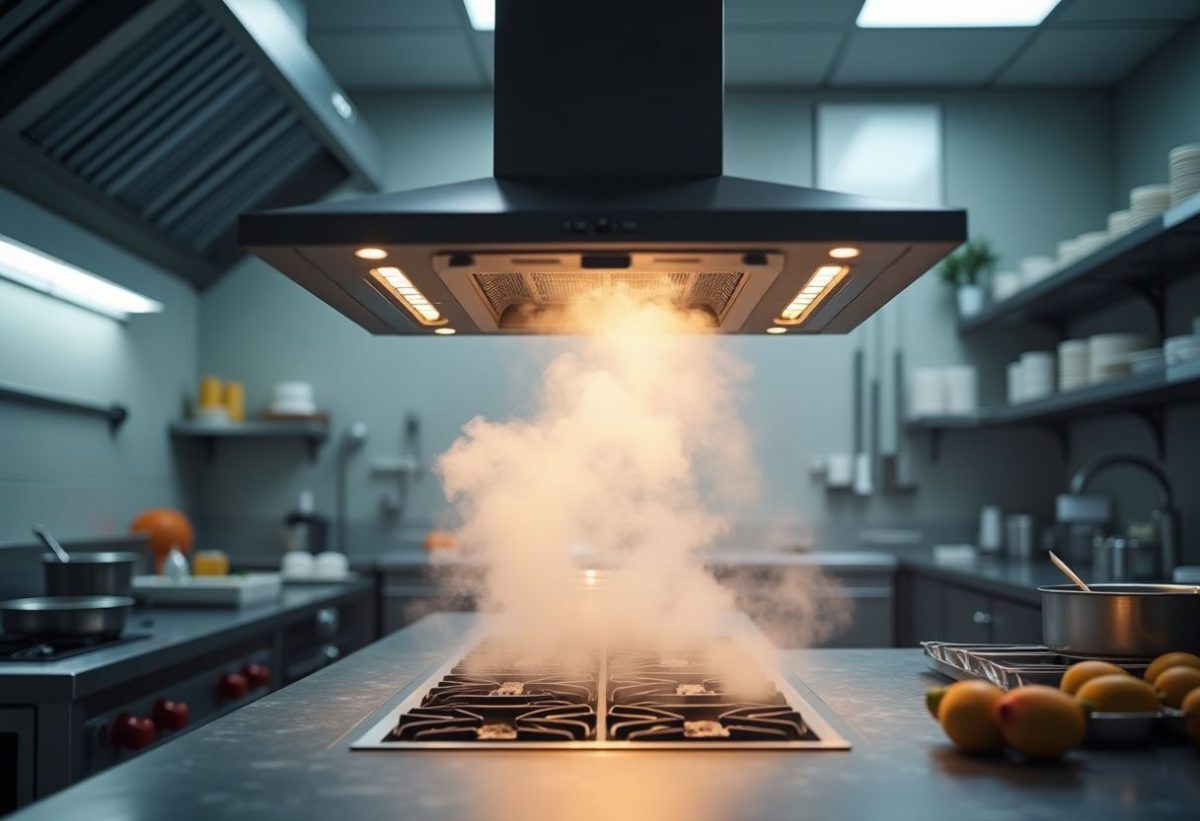
In the restaurant industry, air quality in the kitchen is a major issue. This is where the restaurant extraction turret comes into play. This essential equipment ensures a healthy work environment that complies with health standards by effectively evacuating smoke, grease, and stale air.
Why install an extraction turret in a restaurant?
Benefits of professional ventilation in the kitchen
Effective ventilation in the kitchen is crucial for several reasons. It helps eliminate suspended particles, unpleasant odors, and greasy vapors that can accumulate during cooking. By reducing these elements, the extraction turret for hoods not only improves indoor air quality but also helps prevent fire hazards.
Ventilation efficiency
Extraction turrets for professional kitchens are designed to provide ventilation power tailored to the specific needs of each establishment. They can handle large volumes of air, ensuring quick and effective extraction of smoke and grease, even in the busiest kitchens.
Compliance with health standards
Health standards impose strict criteria regarding air quality and safety in the kitchen. A well-chosen and properly installed extraction turret helps meet these requirements, thus avoiding penalties and administrative closures. This includes adhering to regulatory distances for horizontal discharge extraction and using suitable enclosures to limit visual impact.
Comfort of kitchen staff
A high-performance ventilation system significantly improves the comfort of the teams working in the kitchen. By reducing heat and humidity, it limits fatigue and increases employee productivity. The well-being of the staff is a considerable asset for retaining and motivating teams.
Longevity of kitchen equipment
Good ventilation helps extend the lifespan of kitchen equipment. Grease deposits and cooking residues can damage appliances and require costly repairs. Regular maintenance of ventilation systems, including cleaning filters and professional kitchen hoods, is essential to avoid these problems.
How to choose your restaurant extraction turret?
Selection criteria for an extraction turret
The choice of a restaurant extraction turret depends on several factors. It is important to consider the type of cuisine, specific air flow requirements, and the available space for installation. The dimensions and ventilation power must be suitable to ensure effective extraction.
Type of cuisine and specific needs
Extraction needs vary from one kitchen to another. For example, an Asian kitchen will require more powerful extraction due to the frequent use of woks and frying. Therefore, it is crucial to accurately assess the specific needs of each establishment before investing in this type of equipment.
Dimensions and ventilation power
The size of the turret should be proportional to that of the kitchen and its activity. To achieve this, it is essential to calculate the volume of air to be processed. The larger and busier the kitchen, the more powerful the ventilation system needs to be. A well-sized extraction enclosure optimizes the performance of the entire system.
Installation and maintenance
Installing an extraction turret requires special attention to comply with urban planning and health standards. Regular maintenance is also crucial to ensure its long-term proper functioning. Specialized services like HYES! offer comprehensive disinfection and maintenance services to ensure the longevity of the equipment.
What are the different types of extraction turrets available?
Vertical extraction turrets
Vertical extraction turrets are often preferred for their ability to discharge stale air far from buildings, thus minimizing odor nuisances. They are ideal for urban environments where space is limited. However, their installation can be more complex due to architectural constraints.
Horizontal extraction turrets
As for horizontal extraction turrets, they offer a flexible solution for professional kitchens, especially when rooftop installation is not possible. They are generally more accessible for maintenance and can be adapted to various configurations, providing a practical alternative depending on site constraints.