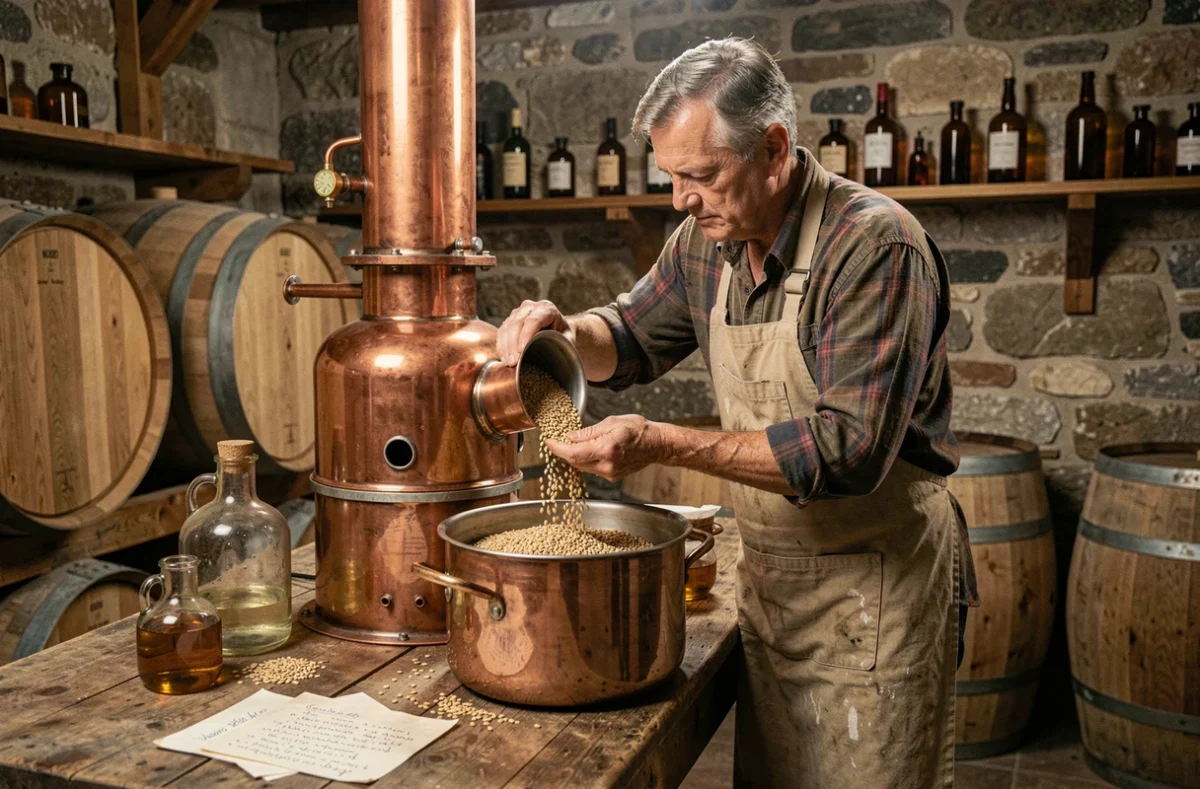
Transforming grains, water, and yeast into an amber spirit reminiscent of commercial single malts is an achievable project as long as a few technical principles are followed. Homemade whisky relies on a precise sequence: malting, mashing, fermentation, distillation, and then aging. Each step directly influences the flavors of the final product, and it’s in the details that the difference between a flat distillate and a rich, aromatic spirit is made.
Legal Framework for Home Distillation in France
Before you get started, a legal point is essential. In France, home alcohol distillation is highly regulated. Only licensed distillers with acquired rights, or those using a licensed mobile distiller, can legally distill.
Regulation (EU) 2019/787 also governs what can be called “whisky”: distillation at less than 94.8% vol., aging for at least three years in wooden containers of a maximum of 700 liters, and bottling at a minimum of 40% vol. Therefore, a homemade distillate aged for less than three years cannot be marketed under the name whisky in the European Union.
Why start with the regulations? Because they condition everything else. If you want to discover Capitaine Comment? to delve deeper into the practical aspects, keep in mind that the legality of your project depends on your status and country of residence.
Choosing Grains and Malting for Homemade Whisky
Malted barley remains the reference grain for producing malt whisky. It naturally contains an enzyme that breaks down starch into fermentable sugars, simplifying the mashing process. Corn, rye, and wheat are also used, but they significantly alter the flavor profile.
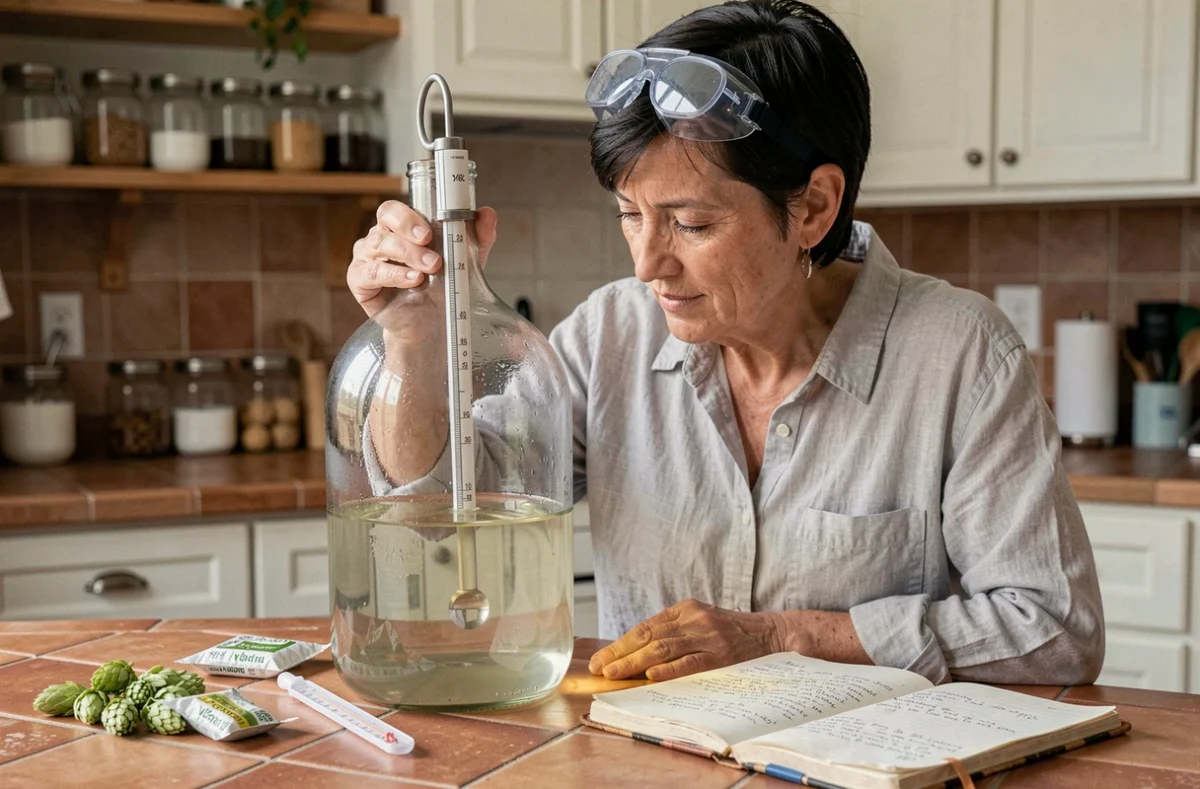
Malting involves germinating the grain and then stopping the germination by drying. Specifically, you soak the barley in water for one to two days, spread it out in a thin layer to germinate, and then dry it at low temperatures. This drying activates the enzymes necessary for starch conversion.
- Malted barley provides sweet, slightly biscuity notes and offers the best yield in fermentable sugars.
- Rye adds spicy, peppery aromas but makes mashing stickier due to its beta-glucan content.
- Corn produces a rounder, sweeter distillate (this is the base of American bourbon, which must contain more than 51% corn).
- Wheat gives a more neutral and silky result, often used as a complement.
The choice of grain determines the character of the final whisky. For a first attempt, malted barley remains the simplest and most predictable choice.
Mashing and Fermentation: Producing an Alcoholic Mash
Mashing transforms the starch from the malt into soluble sugars. You crush the malt (this is called milling), then mix it with hot water. The water temperature plays a crucial role.
A mashing temperature between 62 and 68 °C activates the enzymes that convert starch into sugars. If it’s too cold, the conversion doesn’t start. If it’s too hot, the enzymes are destroyed. Maintain this temperature for about an hour, then filter the resulting liquid. This sweet liquid is called the wort.
Fermentation follows. You add yeast to the cooled wort. Prefer a distilling yeast rather than baker’s yeast, as it tolerates higher alcohol levels better and produces fewer undesirable compounds.
Pour the wort into a fermentation bucket equipped with an airlock. Fermentation usually lasts several days. The airlock indicates activity: when the bubbles stop, fermentation is complete. You then obtain a liquid comparable to un-hopped beer, called “wash.”
Distillation in a Pot Still: Extracting and Concentrating Alcohol
Distillation separates alcohol from water and heavy compounds by heating. The wash is brought to a boil in a still. The alcohol vapors rise, pass through a cooled condenser, and condense into liquid.
The European regulation does not impose a specific type of still. You can use a pot still (discontinuous) or a column still. The pot still produces a more aromatic distillate, as it retains more congeners (the compounds that give character). The column, on the other hand, yields a purer but more neutral alcohol.
The most delicate technical part remains the cut. During distillation, three fractions follow:
- The heads (first milliliters) contain methanol and aggressive volatile compounds. They are systematically discarded.
- The heart of the run concentrates the desired aromas and quality ethanol. This is the fraction you keep.
- The tails arrive at the end of distillation, with heavy oils and sometimes unpleasant flavors.
Knowing when to cut distinguishes a successful distillate from a mediocre alcohol. The nose remains the best tool: when the aromas become heavy or oily, move on to the tails.
Aging in Barrel and Flavor Development
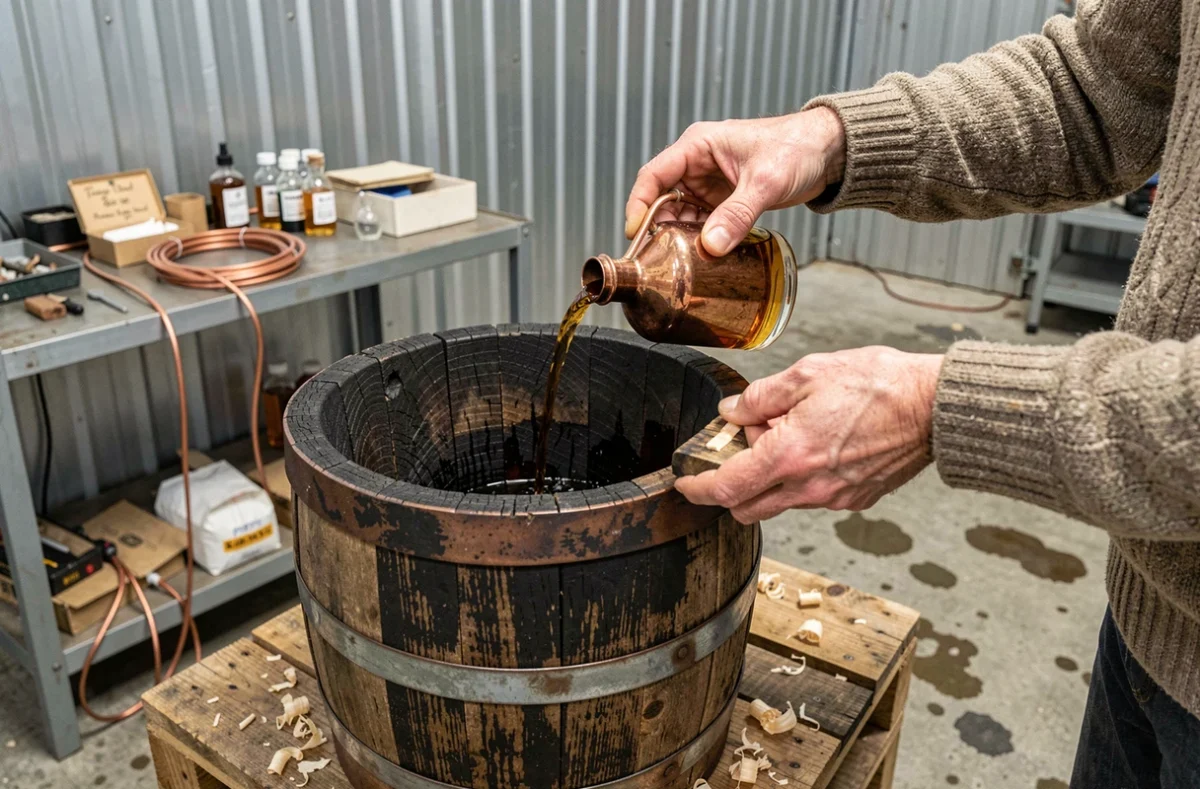
A whisky without aging is just a distillate of grains. The aging in wooden barrels brings color, complexity, and the essence of the final flavors. Oak is the most common wood. Depending on the type of barrel (new, old, previously containing bourbon or sherry), the aromas evolve towards vanilla, caramel, dried fruits, or spices.
For home use, small barrels of a few liters accelerate the exchanges between the wood and the spirit. With a higher surface-to-volume ratio, flavors develop faster. However, be careful: a small barrel can also impart too many tannins if aging lasts too long.
The European regulation prohibits the addition of flavors or sweeteners. Only water (to adjust the proof) and ordinary caramel (for color) are allowed under specified conditions. A homemade whisky aged for less than three years remains a grain spirit, not whisky in the legal sense within the European Union.
Homemade whisky is a project of patience. Between fermentation, distillation, and aging, several months (at a minimum) separate the grain from your first glass. The quality of the water, the freshness of the yeast, the precision of the mashing temperatures, and the rigor of the distillation cuts matter much more than the equipment. Start with a simple recipe based on malted barley, refine your techniques with each attempt, and let the barrel do the rest of the work.