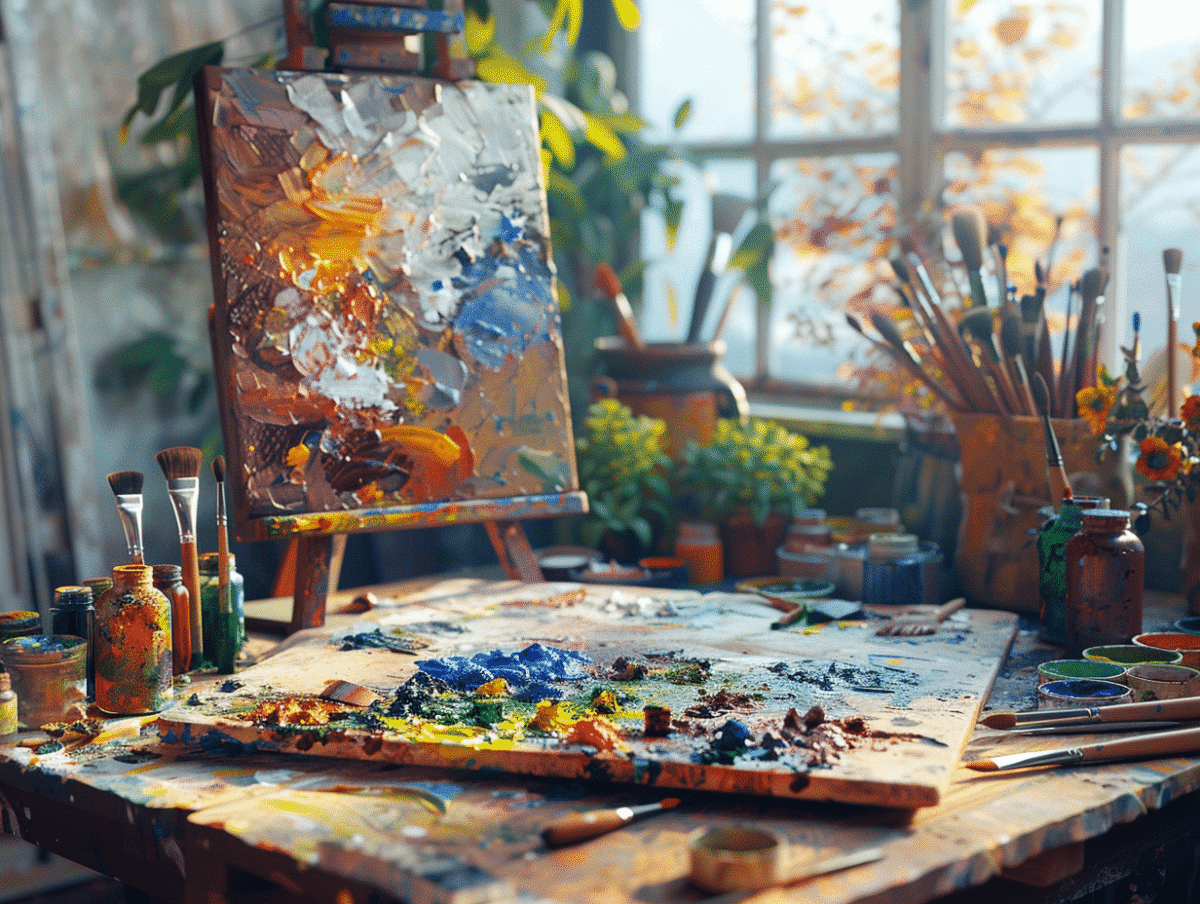
Artists often seek to master the subtle art of color mixing to bring their works to life. Understanding nuances and contrasts can transform a simple canvas into a true work of art. Knowing how to choose and combine hues is an essential skill for creating harmonious gradients and striking effects.
The secrets behind good mixing lie in the knowledge of primary, secondary, and tertiary colors. By playing with the proportions of each hue, it becomes possible to create an infinite palette of shades. Practical tips and expert advice help reveal the full potential of a painting, avoiding common pitfalls like muddy mixes.
The Fundamental Principles of Color Mixing
Mastering the basics of color mixing relies on a deep understanding of primary colors: red, yellow, and blue. These hues form the foundation of any palette. The color wheel, designed by Johannes Itten, is an indispensable tool for visualizing the relationships between colors. It allows one to discern secondary colors, obtained by mixing two primary colors (green, orange, and purple), and tertiary colors, resulting from the combination of a primary color with a secondary color.
Using the color wheel is critical to avoid common mistakes. For example, how to make brown? Mix equal parts of red and green, two complementary colors. This seemingly simple process hides a complexity: each variation in proportion can yield a different shade. The accuracy of the mix depends on the knowledge of precise ratios and the quality of the pigments used.
Mixing Techniques
To achieve a harmonious mix, follow these principles:
- Use pure colors: Mixing high-quality primary colors ensures more vibrant results.
- Test on a palette: Before applying to the canvas, experiment with the mixes on a palette to adjust the proportions.
- Understand interactions: Colors do not behave in isolation. Their interactions can create unexpected effects.
Eugène Delacroix and Michel-Eugène Chevreul studied these phenomena and contributed major theories, such as that of simultaneous contrast of colors. This knowledge allows artists to play with nuances and transform their vision into pictorial reality.
Advanced Techniques and Tips for Successful Color Mixing
Mastering advanced color mixing techniques requires rigor and constant practice. The limited palette is an excellent starting point. By working with a restricted number of colors, you develop a finer understanding of chromatic interactions. This method enhances your ability to create a wide range of shades from a few basic hues.
Always start with light colors and progress to darker tones. This approach prevents difficult-to-correct mistakes and offers better management of tone transitions. Color ratios play a central role in the mixing process. Experiment with different ratios to discover unexpected and enriching combinations.
Practice and Essential Tools
Practice is the key to mastering any skill, including color mixing. Consider using a color chart: this tool helps you visualize and document the combinations you have explored. It thus becomes a valuable reference for your future creations.
Acrylic paint is recommended for beginners due to its flexibility and quick drying time. The Milone Art Academy, founded by René Milone, offers online training to deepen your skills. The courses at this academy cover a variety of techniques and are tailored to different levels of expertise.
Richard Schmid, in his book ‘Alla Prima, Everything I Know About Painting’, shares valuable insights on color mixing. His teachings highlight the importance of daily practice and experimentation. The work of Pierre Soulages, with its unique use of black and light, illustrates how a deep understanding of colors can transform a canvas into a captivating visual experience.