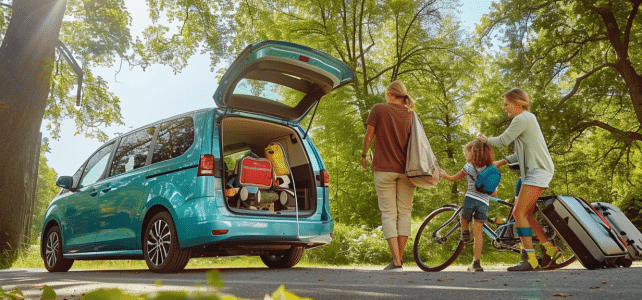
The automotive industry is on the brink of a major transformation, focused on sustainability and innovation. Large families, who have traditionally favored spacious and versatile vehicles to meet their needs, are now turning to a new generation of cars. The transition to electric vehicles presents a significant challenge for manufacturers: they must combine range, space, and accessibility. As environmental concerns grow, the availability of electric vehicles capable of meeting the demands of large families becomes a fundamental issue for the future of the automobile.
The challenges of the transition to electric for large families
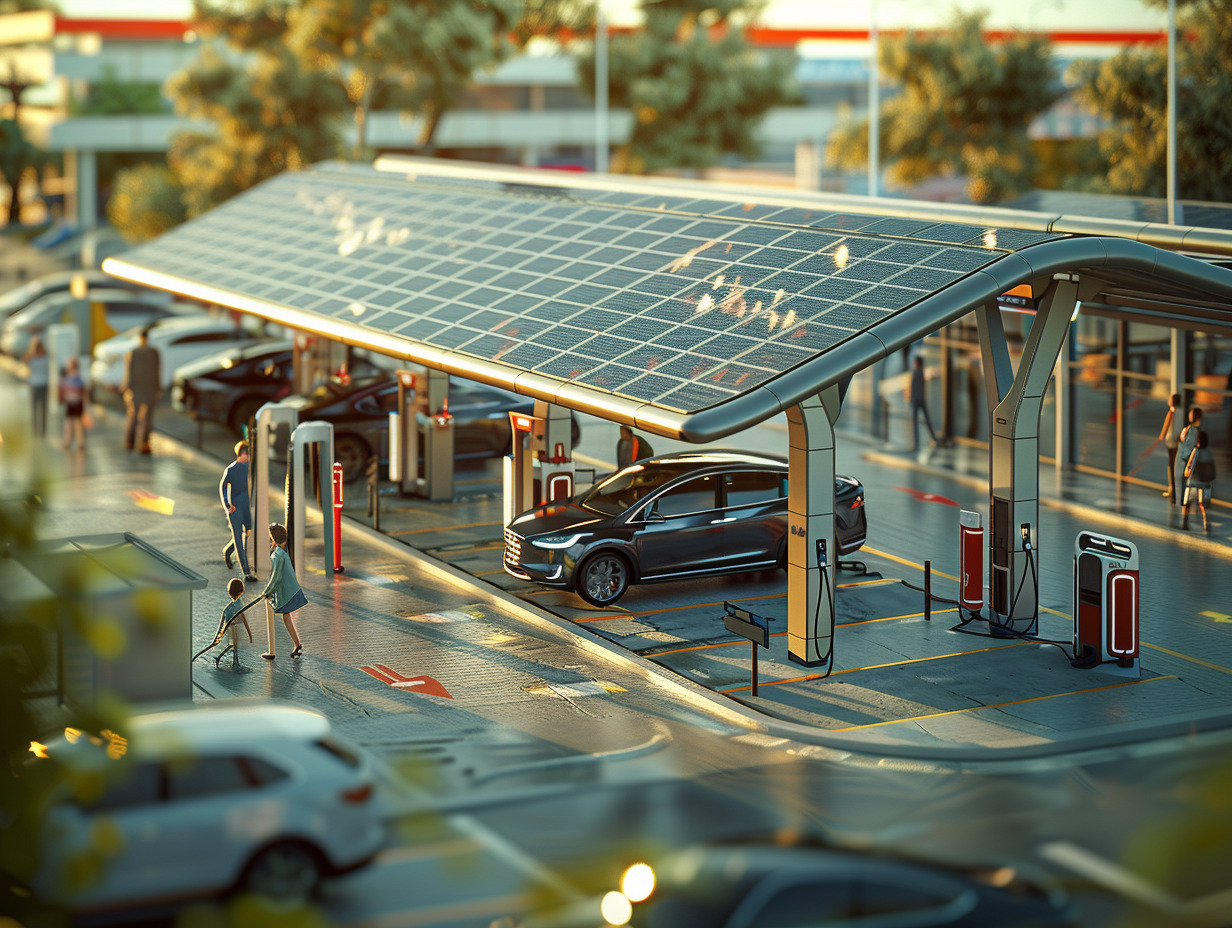
Range and charging: These are the key words that summarize the barriers to the widespread adoption of the family electric car. Batteries must not only allow for long-distance travel to meet family needs but also provide practical and fast charging solutions, adapted to the diversity of urban layouts. The ability to connect residential areas to charging infrastructure becomes a complex equation that the automotive industry must solve. Consider the efforts required to harmonize the development of this infrastructure with the rapid growth of electric vehicle fleets.
Space and comfort: Designing a family electric car requires a delicate balance between interior space, essential for large families, and optimizing space for electrical components, particularly the battery. Manufacturers like Renault, with models such as the KeyZee, are striving to develop affordable electric vehicles that offer the necessary space without compromising range. The KeyZee, the electric version of the Kwid, launched in China with a global purpose, embodies this ambition for disruption, much like what the Logan represented in the past.
Environmental impact: The transition to electric vehicles for large families is part of a commitment to reducing greenhouse gas emissions. It is vital to consider the overall ecological footprint, from battery production to end-of-life recycling. The automotive industry, marked by capital intensity, faces the need for rapid adaptation to increasing environmental demands. Take into account the challenges this represents for manufacturers, in terms of investment and innovation, to make the family electric car not only practical and desirable but also sustainable throughout its entire lifecycle.
Solutions and innovations for the future of family mobility
Towards technological simplification: Echoing the words of Aimé Jardon, former Deputy General Director of Renault, ‘Every product dies from its excessive complexity and is regenerated from the bottom up,’ the automotive industry could well return to a certain simplicity. Think of more accessible electric vehicles, less complex and therefore less expensive, capable of meeting the essential expectations of families. Guillaume Devauchelle, a figure in the automotive world, thus lays the cornerstone of a future where simplicity reigns, proposing a lightweight two-seater vehicle at 48 volts, estimated at 7,000 euros.
The affordability strategy: As the energy transition accelerates, Éric Feunteun, an industry expert, emphasizes the need to make new technologies accessible. The democratization of electric vehicles involves reducing costs, undoubtedly a major challenge for manufacturers. Models like those envisioned by Peugeot or Volkswagen fit into this logic, offering alternatives for budget-conscious families while wanting to make an eco-responsible choice.
Improving mass transit infrastructure: The question of family mobility extends beyond just personal vehicles. Mass transit remains a fundamental aspect of urban mobility. In Hong Kong, for example, authorities are exploring the introduction of electric shuttles to optimize the public transport system. This direction, discussed by experts like Guillaume Devauchelle, could well constitute a cornerstone in the future of family mobility, integrating the electric car into a broader and interconnected network of transportation solutions.