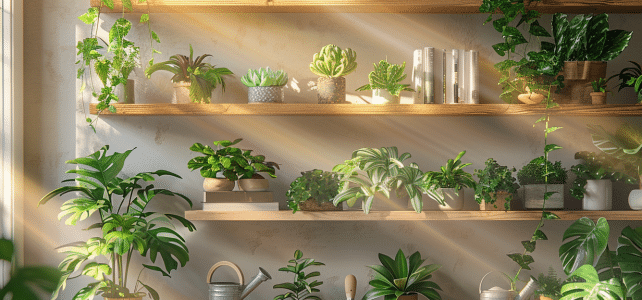
In the world of home horticulture, indoor plants such as the ficus and monstera are popular choices for their ability to enhance a living space and their benefits for air quality. Keeping these plants healthy requires specific know-how. Owners of these green plants often seek tips to optimize their growth and well-being. Proper watering, light exposure, soil choice, fertilization, and disease prevention are major aspects to ensure the vitality and longevity of these species at home.
Care and Specific Needs of Popular Indoor Plants
The Monstera, the quintessential tropical plant, requires special attention to thrive away from its natural habitat. Tips for Monstera: This species ideally develops in an environment that replicates its native habitat. Provide these plants with bright, indirect sunlight, essential for photosynthesis without burning their delicate foliage.
The ideal temperature for Monstera ranges from 21 to 32°C, a warm climate that promotes sustained growth. The soil must be chosen wisely: a well-draining soil is imperative to prevent root rot. Opt for a rich, airy potting mix that retains necessary moisture while allowing sufficient drainage of excess water.
Ambient humidity is another key factor. Monstera-type plants thrive in a humid atmosphere, reminiscent of their original tropical environment. To maintain a high humidity level, consider regularly misting the foliage or placing your plant near a humidifier. This measure will prevent leaf drying and promote harmonious growth.
Your Monstera’s nutrition should not be overlooked. A monthly fertilization during the growing season will provide the necessary nutrients for its development. Use a balanced fertilizer specific to green plants. As for pruning, trimming a ficus or a Monstera is sometimes necessary to remove dead or diseased leaves and encourage the plant to branch out more, but always in moderation and respecting the plant’s natural shape.
Common Problems and Solutions for the Health of Your Indoor Plants
Caring for indoor plants, while rewarding, can sometimes be fraught with challenges. Take the example of the Monstera, whose leaves can turn yellow or brown due to overwatering. Ensure you adopt a moderate watering routine and allow the soil to dry between waterings to avoid this problem. A well-draining soil is essential to prevent root rot and other damage related to stagnant water.
Pests, such as aphids, spider mites, or mealybugs, can also attack your Monstera, especially when the plant is weakened or stressed. Frequently inspect the foliage and act promptly in case of an infestation. Eco-friendly solutions, such as using insecticidal soap or introducing natural predators, can be considered to restore the health of your plants.
Another often overlooked aspect is the potential toxicity of certain indoor plants, including Monstera, to our four-legged companions. If you have pets, carefully position your plants out of reach or in inaccessible rooms to avoid any accidental contact that could be harmful to your dear friends.
The natural leaf drop in Monstera is a normal biological process that makes way for new growth. If this phenomenon becomes excessive, it may indicate an imbalance in growing conditions. Adjust parameters such as light, humidity, temperature, and nutrition of your plant to promote healthy and vigorous foliage renewal.